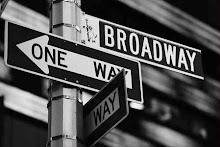
Ginsberg, That lucky fellow
He saw the best minds of his generation destroyed by madness
All of the minds in my generation were destroyed
by television
He could write about
defying the social norm
But now, no one understands.
He had the vietnam war, the 60's
ginsberg was a lucky fellow
writig material was all handed to him
On a silver platter
But now
All that we write about
is sunsets, and roses
How are they going to start a revolution?
Tuesday, May 5, 2009

Ode to DNA
A protein would not even try to compare
To a molecule so great, it wouldn't dare
Though scientists tried to lead us astray
This is an ode to DNA
It began with a question. How did we come about?
And soon enough, an idea did sprout
of a single molecule so important indeed
that to create new life it would be all that we need
So in my heart lies a special place
reserved to be thankful for each nitrogen base
and in each and every human cell
a strand of DNA will always dwell
To a molecule so great, it wouldn't dare
Though scientists tried to lead us astray
This is an ode to DNA
It began with a question. How did we come about?
And soon enough, an idea did sprout
of a single molecule so important indeed
that to create new life it would be all that we need
So in my heart lies a special place
reserved to be thankful for each nitrogen base
and in each and every human cell
a strand of DNA will always dwell
Monday, March 30, 2009
Old man on the sea essay
The Old Man and the Sea essay assignment
When there is defeat, a yearn to try harder is born with it. After losing a game, the team has a motive to practice harder than ever, because they now have a goal to reach. After getting a bad grade on a test, one has the drive to study longer, and harder. In the novella, Old Man and the Sea, by Ernest Hemingway, Santiago has not caught a fish in 84, and has been defeated by the sea. Throughout the book, there is a theme of determination. Santiago’s determination was fueled by his previous defeat, and it makes him try harder to reach his goal.
In the beginning of the book, on page 10, we learn in the first paragraph that Santiago is “definitely and finally Salao, which is the worst form of unlucky.” Although it is true that Santiago was unlucky or that you could argue he was unlucky, this doesn’t defeat him, and he continues with the activity that he loves. Also, Santiago accepts his "unluckyness" and believes that he will be lucky again, when the time has come. Instead of being defeated by this, he turns it around to make himself more determined to defy what others are saying about him. Although in the book it is emphasized that this is what he loves doing, he is pushed further by this defeat.
It is not only Santiago, but the Marlin and shark that are determined to survive, and refuse to be killed, whether that is not being caught (the marlin) or claiming food (the shark). "If I were him I would put in everything now and go until something broke. But, thank God, they are not as intelligent as we who kill them; although they are more noble and more able." This quote explains the intellectual difference between hunter and hunted, and that the hunted are usually not as intelligent as humans, but still as noble. I have noticed, and think that it is almost entirely true that animals never immediately give in to a threat, and will keep their pride throughout the struggle for life.
Fish, you are going to have to die anyway. Do you have to kill me too?" Santiago says on page 111. As well as knowing his death will come, he knows that other species are certainly not immortal. In this quote he fights for his "survival" (really meaning financially in this quote. or being knocked into the sea) and pushes the fishes life aside. this quote explains how we can often rank a species importance by how long it lives, as well as their asset to the world. But what asset are humans to the lives of fish? I answer this by saying that our superiority makes this question not matter.
In a famous quote by Hemingway, he says "the fish is a fish, the old man is an old man, and the shark is a shark. The symbolism you hear is [crap]" And i agree that there really is no allegory whatsoever in the story. The struggle for life in this story may be shadowed by the plot, but when it does come up throughout the book, it is not a metaphor for something else. A fish is a fish, and survival is survival for any living animal. Being one of the most prominent themes in the story, we learn how even with the fullest knowledge of knowing our downfall, we still use every ounce of courage we have to stay alive. Fascinating, isn't it?
When there is defeat, a yearn to try harder is born with it. After losing a game, the team has a motive to practice harder than ever, because they now have a goal to reach. After getting a bad grade on a test, one has the drive to study longer, and harder. In the novella, Old Man and the Sea, by Ernest Hemingway, Santiago has not caught a fish in 84, and has been defeated by the sea. Throughout the book, there is a theme of determination. Santiago’s determination was fueled by his previous defeat, and it makes him try harder to reach his goal.
In the beginning of the book, on page 10, we learn in the first paragraph that Santiago is “definitely and finally Salao, which is the worst form of unlucky.” Although it is true that Santiago was unlucky or that you could argue he was unlucky, this doesn’t defeat him, and he continues with the activity that he loves. Also, Santiago accepts his "unluckyness" and believes that he will be lucky again, when the time has come. Instead of being defeated by this, he turns it around to make himself more determined to defy what others are saying about him. Although in the book it is emphasized that this is what he loves doing, he is pushed further by this defeat.
It is not only Santiago, but the Marlin and shark that are determined to survive, and refuse to be killed, whether that is not being caught (the marlin) or claiming food (the shark). "If I were him I would put in everything now and go until something broke. But, thank God, they are not as intelligent as we who kill them; although they are more noble and more able." This quote explains the intellectual difference between hunter and hunted, and that the hunted are usually not as intelligent as humans, but still as noble. I have noticed, and think that it is almost entirely true that animals never immediately give in to a threat, and will keep their pride throughout the struggle for life.
Fish, you are going to have to die anyway. Do you have to kill me too?" Santiago says on page 111. As well as knowing his death will come, he knows that other species are certainly not immortal. In this quote he fights for his "survival" (really meaning financially in this quote. or being knocked into the sea) and pushes the fishes life aside. this quote explains how we can often rank a species importance by how long it lives, as well as their asset to the world. But what asset are humans to the lives of fish? I answer this by saying that our superiority makes this question not matter.
In a famous quote by Hemingway, he says "the fish is a fish, the old man is an old man, and the shark is a shark. The symbolism you hear is [crap]" And i agree that there really is no allegory whatsoever in the story. The struggle for life in this story may be shadowed by the plot, but when it does come up throughout the book, it is not a metaphor for something else. A fish is a fish, and survival is survival for any living animal. Being one of the most prominent themes in the story, we learn how even with the fullest knowledge of knowing our downfall, we still use every ounce of courage we have to stay alive. Fascinating, isn't it?
Sunday, March 1, 2009
third quarter outside reading book review
Third quarter outside book review
Breaking Dawn by Stephanie Meyer
Little brown and Company, 2008. Fantasy fiction.
Breaking Dawn is the four books in the twilight saga, continuing and perhaps concluding the story of Edward and Bella’s romance, and the Journey they have been through together. The book is written in three sections; in Bella’s point of view, then Jacobs, and then back to Bella’s. It starts off with Edward and Bella’s wedding, which Alice plans, although Bella is reluctant to let her. They leave for their honeymoon that night and end up at Isle Esme, a private island on the coast of Brazil that Carlisle bought Esme. They arrive at the home they will be staying in, and fulfilling his promise, Edward makes love to Bella. After a long stay on the island, Bella realizes her period is late, and feels a bump in her stomach, which she thinks to be a baby, but realizes that it couldn’t have grown so much in this amount of time. She calls Carlisle who tells them to come home immediately, and learns she is pregnant. The baby grows very quickly and is a vampire hybrid. Because it is so strong it is hurting Bella from the inside. After just a month, the baby is born, by tearing its way out through Bella’s stomach. Bella loses so much blood that Edward can only save her by turning into a vampire. She sees her child for the first time, and names her Renesmee. Soon, the Cullen’s got a visit from Irina, who misunderstands Renesmee for being an immortal child and goes to the Volturi, who then try to kill Renesmee and the Cullens. The Cullen’s go around the world in search of other vampires to stand as witnesses that Renesmee is not a threat. When the Volturi confront the Cullen’s and their witnesses, they realize that they have been mistaken and execute Irina for her mistake. When they are still deciding whether Renesmee is in fact a threat to the discovery of vampires, Alice and Jasper show up with a hybrid named Nahuel, who demonstrates that she poses no threat.
“A near-genius balance of breathtaking romance and action…” –VOYA
Stephanie Meyer has an incredibly descriptive writing style that shows throughout her series. Love is also a prominent theme in all of the books. In this book, however, she used two different perspectives of the story, something she has not done before. She references the bible several times, and also uses Shakespeare’s books to compare with events or struggles in the story.
“Though the fire did not decrease one tiny degree-in fact, I began to develop a new capacity for experiencing it, a new sensitivity to appreciate, separately, each blistering tongue of flame that licked through my veins-I discovered that I could think around it.” – pg. 378
Yes, I am one of those crazed Stephanie Meyer fans. The ones who come home from a long day of school and pick up the book right as they walk in the door. But the reasons for this are her amazing use of description, and getting to know each and every character and event so well, as well as her emphasis on the power of love, that everyone, including me can relate to and strive for.
Breaking Dawn by Stephanie Meyer
Little brown and Company, 2008. Fantasy fiction.
Breaking Dawn is the four books in the twilight saga, continuing and perhaps concluding the story of Edward and Bella’s romance, and the Journey they have been through together. The book is written in three sections; in Bella’s point of view, then Jacobs, and then back to Bella’s. It starts off with Edward and Bella’s wedding, which Alice plans, although Bella is reluctant to let her. They leave for their honeymoon that night and end up at Isle Esme, a private island on the coast of Brazil that Carlisle bought Esme. They arrive at the home they will be staying in, and fulfilling his promise, Edward makes love to Bella. After a long stay on the island, Bella realizes her period is late, and feels a bump in her stomach, which she thinks to be a baby, but realizes that it couldn’t have grown so much in this amount of time. She calls Carlisle who tells them to come home immediately, and learns she is pregnant. The baby grows very quickly and is a vampire hybrid. Because it is so strong it is hurting Bella from the inside. After just a month, the baby is born, by tearing its way out through Bella’s stomach. Bella loses so much blood that Edward can only save her by turning into a vampire. She sees her child for the first time, and names her Renesmee. Soon, the Cullen’s got a visit from Irina, who misunderstands Renesmee for being an immortal child and goes to the Volturi, who then try to kill Renesmee and the Cullens. The Cullen’s go around the world in search of other vampires to stand as witnesses that Renesmee is not a threat. When the Volturi confront the Cullen’s and their witnesses, they realize that they have been mistaken and execute Irina for her mistake. When they are still deciding whether Renesmee is in fact a threat to the discovery of vampires, Alice and Jasper show up with a hybrid named Nahuel, who demonstrates that she poses no threat.
“A near-genius balance of breathtaking romance and action…” –VOYA
Stephanie Meyer has an incredibly descriptive writing style that shows throughout her series. Love is also a prominent theme in all of the books. In this book, however, she used two different perspectives of the story, something she has not done before. She references the bible several times, and also uses Shakespeare’s books to compare with events or struggles in the story.
“Though the fire did not decrease one tiny degree-in fact, I began to develop a new capacity for experiencing it, a new sensitivity to appreciate, separately, each blistering tongue of flame that licked through my veins-I discovered that I could think around it.” – pg. 378
Yes, I am one of those crazed Stephanie Meyer fans. The ones who come home from a long day of school and pick up the book right as they walk in the door. But the reasons for this are her amazing use of description, and getting to know each and every character and event so well, as well as her emphasis on the power of love, that everyone, including me can relate to and strive for.
Tuesday, February 10, 2009
Unpredictable
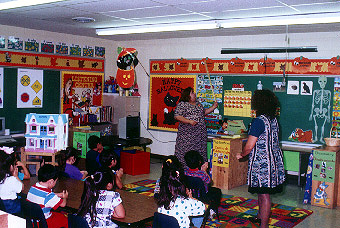
“Nathan!” Mrs. Simmons yelled shrilly. She maneuvered around the labyrinth of glitter dusted tables, and piles of light up sneakers to the rug in the center of the room, to where Nathan Baker stood over his brother Thomas lifting him up by his shirt. Thomas had a bloody nose and a split lip, and the pallor of his gaunt face was more prominent than usual.
“What have you done?” The teacher directed toward Nathan, who just stared at her as if nothing was wrong.
“I think it’s time for you to take a trip to the office young man. Once again, your callowness has shined through.” She said, in a low angry tone.
Mrs. Simmons cradled Thomas in her hands and rushed down the carpeted hallway to the Nurses office. She plopped Nathan on the examination bed, which smelled of rancid dirty socks, and handed him over to the Nurse, Mrs. Brown. About 15 minutes later, right before the school day ended, Thomas showed up back in Mrs. Simmons classroom with a cherry red lollipop in one hand and an icepack in the other. He looked content, but also partially in pain.
“Thomas, are you alright?” Mrs. Simmons asked him.
Thomas nodded, and then flinched in pain. The bleeding had stopped, but the bruising had begun.
Strangely, this wasn’t an irregular thing. It usually didn’t take until the end of the day for Nathan to have Thomas in tears. He treated him like a piece of dirt, but usually only verbally. Mrs. Simmons wondered what set him off today. Nathan knew the time out corner like the back of his hand, and wasn’t ashamed of it. He and a small bevy of his friends were the bullies of the first grade class, but Nathan got the worst of it. The real reason for this feud was because Nathan didn’t feel he got the attention he deserved. After Thomas was born, all the attention turned to him, the dimpled, baby faced brown haired boy that everyone loved. He was jealous, and that jealousy never seemed to fade.
Mrs. Simmons sat Thomas and Nathan down at one of the blue round tables in the class, likes she did every time something like this happened. Their class mates giggled at the door, trying to listen to what had happened in the most recent battle royal. Nathan took his usual seat across the table, propping his legs up, and Thomas sat right next to Mrs. Simmons. Apologize were exchanged, lessons learned, and nothing really changed for either of them. The discussion was soon over, and the kids ran off out of the school to meet their parents eager to go to soccer practice, or piano lessons.
Nathan and Thomas greeted their mother, Beth, in front of the familiar red minivan and jumped up into their seats. Beth took one glance at Thomas and let out a shrill cry.
“My baby! What happened to-” she stopped mid sentence and turned to Nathan who was haphazardly casting his books out of his backpack into the car looking for leftover snack.
“Nathan Isaac Baker, what in heavens did you do to him now?” she exclaimed, reprimanding him.
“I was just playing.” He said, snickering into his palm.
“This,” she said, pointing to his lip, “Is not playing. You are grounded until your married!” then Beth picked up the heaviest book that flew out of his backpack and hit Nathan upside the head.
“I hate you!” Nathan yelled. “I hate you all! Especially you Thomas. I hate you the most! No one pays attention to me! It’s all about you!” he said, then took off into the parking lot away from the van.
Thomas pulled his thumb out of his mouth and cast a panicked glance at his mother.
“Mommy? Tom exclaimed. “Why did he say that? It wasn’t true, right?”
“Oh sweetie, of course not!” Beth embraced Thomas, and mashed his face into her curly brown hair. What was she supposed to say?
“I have to go get him. I have to tell Nathan I love him. Because maybe he doesn’t know. NATHAN!” Thomas wiggled out of his mothers iron grip and sprinted into the parking lot.”
“Thomas get back here! Thomas!” She exclaimed. But he had already run halfway back to the school where Thomas sat by the front doors, face nestled in his hands.
“Nathan! Thomas tried again. “You don’t have to worry! Mom and I love you just as much as anyone loves me. And even if you get mad sometimes, I still-“he was cut short by the loud horn of a pickup truck turning into the parking lot by the front school. Just as Thomas finished its sentence the bumper of the truck knocked him prostrate on the road.
“Thomas!” Nathan immediately jumped up from his sitting position and ran over to his brother, leaning down over his closed eyes, and still chest.
“Ring this buzzer on the side of the bed if you need me,” the nurse said glibly to Beth, in contrast to the otherwise tense emotion in the room. The crash had left Thomas in a coma, with severe hemorrhaging and after the incident Nathan was by his side nonstop. He refused to leave the room, and sat right by Thomas bed starting at his closed eyes. Nathan read stories to Thomas and left little cups of chocolate pudding by his hand in case he woke up hungry. Immediately after the accident Beth had seen a change in Nathan. He had realized that in that moment he could have lost his brother forever and there was still a chance that would happen now. As Nathan stood over Thomas, he constantly blamed himself for what had happened. Beth had tried to convince him that was nonsense, but he didn’t believe her.
Nathan, Beth, a few nurses, and Tom’s father all sat cramped in the tiny patients room watching the monitor like their favorite TV show. Hours had gone by without a clue as to Tom’s condition. But suddenly, everyone’s heads perked up with the sound of a constant beeping.
“Mommy?” Nathan asked impatiently, “Mommy what’s that? What’s happening?”
“I…I’m not sure. Nurse!” she pressed the small white button and watched as the nurse rushed into the room.
“The monitors beeping. What does this mean?” she asked.
“Well, it looks as if Tom is waking up!” she informed us after checking the monitor. “His heart is at a steady pace, and his brain is functioning normally.”
“Does this mean he’s ok?” Nathan asked hopefully.
“Well, let’s go and see.” The nurse replied. They all walked over to Thomas bed to find no change.
“Thomas. Thomas can you hear me?” the nurse said. And then, Thomas stirred just the tiniest bit, and everyone in the room gasped. In a matter of minutes, he had opened his eyes, and accidentally knocked one of the pudding cups off of the bed. Thomas looked around the room in shock, and seemed vexed and disoriented.
“You’re ok! My baby. We thought we were going to lose you!” Beth said, alleviated, and kissed him lightly on the forehead, brushing his hair out of his eyes.
“How do you feel?” Thomas didn’t respond, but smiled weakly up at his mother.
Nathan ran up to his bed next.
“Oh Thomas! I’m so sorry. It was my entire fault you got into the accident; I shouldn’t have treated you that way.” He exclaimed, tears building in his eyes.
“I promise to never ever be mean to you again. You’re my brother, and I’ve always loved you.” He embraced Thomas, who in turn let out a squeal of pain.
“Nathan, honey, you should probably let Thomas rest.” Beth told Nathan.
“No, it’s ok,” Thomas replied weakly.
“Nathan, I love you too.” He said.
“And the accident was not your fault,” Beth added, “it happened by chance, and life can be full of surprises, and that should remind us all to love the people who are close to us more.”
Thomas was emancipated from the hospital that night. The brother grew closer to each other with each passing day and Nathan never layed a finger on Thomas. But that day was ended with a lesson, that you can lose the ones you love when you least expect it.
Saturday, January 31, 2009
short story (draft 1)
By the end of class, the color of Thomas’ Simmons face was almost completely white. The pallor of his gaunt face made him appear to be see through. He definitely looked sick. I maneuvered around the labyrinth of glitter dusted tables, and piles of light up sneakers to the rug in the center of the room, where all the children sat, and waited anxiously for the ding of the afternoon bell. I squatted down near Thomas, and eyed him keenly. He didn’t usually get sick, and was normally jumping off the walls by the end of the day.
“Thomas,” I asked, concerned, “Are you feeling alright?”
He deliberately shook his head, and breathed deeply as if to calm himself. Then he leaned back and cast his lunchbox on the floor.
“The nurse is still in her office. We could go stop by if you’d like.” I suggested.
“No, that’s alright Ms. Annie. It’s almost the end of the day, and I don’t feel that bad.”
“Ok.” I replied suspiciously, “But keep me updated.”
I smiled and tickled his chin, and then I turned to look at the clock. Five minutes before three, just in time for afternoon announcements.
“Alright second grade, listen up!” I clapped three times, and waited for them to repeat.
“Tomorrow, we have Nathan and Thomas’ parents coming in to tell our class about each one of their jobs for Parent week, so think up some interesting questions to ask them when your home tonight, okay? And our first spelling test is on Friday, so you only have two more days to study. And have a good day!” I managed to get that out right as the bell rang.
I hopped up on one of the benches on the rug to avoid being trampled by the stampede of children, and then walked over to clean up the cubbies. I stopped in front of Thomas’ to scoop up his change of clothes that had fallen to the ground. Thomas was by far the recluse in the class, but also, no question, the most inquisitive. Instead of swinging from the monkey bars like the rest of the class, we had a whole conversation about long division yesterday at recess. I was surprised at how much he knew, but lost him once I talked about the concept of remainders. Not only was Thomas smart, but he thought differently than the other kids did. Once they got an answer to a question, they were through with it, and kept it stored In the back of their little brains, cluttered among other useless information. But Thomas would toy with the subject, questioning it until it was dry, wanting to understand every aspect of it. I had known Thomas and his family for quite some time now, and loved him just as much I would my own child.
I walked over to Nathans cubby, at the other end of the cubby rack. His large pile of action figures and rancid spoiled food represented his callowness. He and a small bevy of his friends were the bullies of the class, but Thomas got the worst of it. He knew the time out corner like the back of his hand, and didn’t seem to be ashamed of it. And it wasn’t uncommon when he had Thomas in tears by lunch time. But I never seemed to mind reprimanding him, and pulling out the ‘old ruler and giving him a good smack every time that happened. What I wouldn’t do to protect Thomas.
I got to school an hour early to set up for parents day, when I ran into Thomas’ mother in the office. I waved, and smiled graciously, but the smile in return wasn’t nearly what I’d hoped it would be. There were dark circles under her eyes and her hair was pulled up into a messy pony tail. She looked distraught. Worried maybe? Regardless, she came over to say hello, and walked me out of the office into the hallway by my classroom.
“Hello Ms. Annie. Unfortunately, I have some bad tidings for you. It’s about Thomas.”
I was vexed by her story and knit my brows together in confusion.
“Well,” she continued hesitantly, “About an hour after he came home from school, we found him passed out, and prostrate on his floor. We took him to the hospital, not expecting anything to be wrong, but they told us he had some, “complications,” and needed to run some blood tests.” She took a deep breath before she spoke again. “It turns out that….Thomas has leukemia.” She cupped her hand over her thin mouth, and made a shrill crying sound, then started to sob softly. I embraced her and let her cry on my shoulder.
The news took me completely off guard. I gasped, and soon felt tears of my own start to run down my cheeks. Why Thomas? Why now? I asked myself. I asked the Office to find me a substitute for today, and took off with Thomas mother. She informed me that he was at the hospital now, starting treatment, but it didn’t look promising. The whole thing just felt unreal.
I got to the hospital only to find Thomas knocked out from the pain medication, and decided to go home to think things over. I kissed him on the forehead before I left, and left my good wished with his parents.
The next day went by in a haze. Without Thomas in class, it felt like an important piece of me was missing. Some of the kids asked where he was, others didn’t notice. But what they did notice was my change of mood. From cheerful, peppy teacher to dismal, pessimistic Annie. I hated to make them sad, so I tried to put my best face forward, but I was still aloof to the class. Weeks passed by, a number of hospital visits, only to find Thomas asleep, or in some type of surgery.
But then, in the middle of math class on Monday, I got a phone call. A simple exchange of three lines, between me and Mrs. Simmons when I learned that Thomas had been pronounced dead this afternoon. I cried with the class, and even Nathan joined in and apologized for all he had done to Thomas. For the rest of class, we decided to write letters to him in heaven; talking about all of the things he’d done that made us happy. Mine was the longest.
(sorry jenny! its not that good, and it ends kind of fast. ill make it better)
“Thomas,” I asked, concerned, “Are you feeling alright?”
He deliberately shook his head, and breathed deeply as if to calm himself. Then he leaned back and cast his lunchbox on the floor.
“The nurse is still in her office. We could go stop by if you’d like.” I suggested.
“No, that’s alright Ms. Annie. It’s almost the end of the day, and I don’t feel that bad.”
“Ok.” I replied suspiciously, “But keep me updated.”
I smiled and tickled his chin, and then I turned to look at the clock. Five minutes before three, just in time for afternoon announcements.
“Alright second grade, listen up!” I clapped three times, and waited for them to repeat.
“Tomorrow, we have Nathan and Thomas’ parents coming in to tell our class about each one of their jobs for Parent week, so think up some interesting questions to ask them when your home tonight, okay? And our first spelling test is on Friday, so you only have two more days to study. And have a good day!” I managed to get that out right as the bell rang.
I hopped up on one of the benches on the rug to avoid being trampled by the stampede of children, and then walked over to clean up the cubbies. I stopped in front of Thomas’ to scoop up his change of clothes that had fallen to the ground. Thomas was by far the recluse in the class, but also, no question, the most inquisitive. Instead of swinging from the monkey bars like the rest of the class, we had a whole conversation about long division yesterday at recess. I was surprised at how much he knew, but lost him once I talked about the concept of remainders. Not only was Thomas smart, but he thought differently than the other kids did. Once they got an answer to a question, they were through with it, and kept it stored In the back of their little brains, cluttered among other useless information. But Thomas would toy with the subject, questioning it until it was dry, wanting to understand every aspect of it. I had known Thomas and his family for quite some time now, and loved him just as much I would my own child.
I walked over to Nathans cubby, at the other end of the cubby rack. His large pile of action figures and rancid spoiled food represented his callowness. He and a small bevy of his friends were the bullies of the class, but Thomas got the worst of it. He knew the time out corner like the back of his hand, and didn’t seem to be ashamed of it. And it wasn’t uncommon when he had Thomas in tears by lunch time. But I never seemed to mind reprimanding him, and pulling out the ‘old ruler and giving him a good smack every time that happened. What I wouldn’t do to protect Thomas.
I got to school an hour early to set up for parents day, when I ran into Thomas’ mother in the office. I waved, and smiled graciously, but the smile in return wasn’t nearly what I’d hoped it would be. There were dark circles under her eyes and her hair was pulled up into a messy pony tail. She looked distraught. Worried maybe? Regardless, she came over to say hello, and walked me out of the office into the hallway by my classroom.
“Hello Ms. Annie. Unfortunately, I have some bad tidings for you. It’s about Thomas.”
I was vexed by her story and knit my brows together in confusion.
“Well,” she continued hesitantly, “About an hour after he came home from school, we found him passed out, and prostrate on his floor. We took him to the hospital, not expecting anything to be wrong, but they told us he had some, “complications,” and needed to run some blood tests.” She took a deep breath before she spoke again. “It turns out that….Thomas has leukemia.” She cupped her hand over her thin mouth, and made a shrill crying sound, then started to sob softly. I embraced her and let her cry on my shoulder.
The news took me completely off guard. I gasped, and soon felt tears of my own start to run down my cheeks. Why Thomas? Why now? I asked myself. I asked the Office to find me a substitute for today, and took off with Thomas mother. She informed me that he was at the hospital now, starting treatment, but it didn’t look promising. The whole thing just felt unreal.
I got to the hospital only to find Thomas knocked out from the pain medication, and decided to go home to think things over. I kissed him on the forehead before I left, and left my good wished with his parents.
The next day went by in a haze. Without Thomas in class, it felt like an important piece of me was missing. Some of the kids asked where he was, others didn’t notice. But what they did notice was my change of mood. From cheerful, peppy teacher to dismal, pessimistic Annie. I hated to make them sad, so I tried to put my best face forward, but I was still aloof to the class. Weeks passed by, a number of hospital visits, only to find Thomas asleep, or in some type of surgery.
But then, in the middle of math class on Monday, I got a phone call. A simple exchange of three lines, between me and Mrs. Simmons when I learned that Thomas had been pronounced dead this afternoon. I cried with the class, and even Nathan joined in and apologized for all he had done to Thomas. For the rest of class, we decided to write letters to him in heaven; talking about all of the things he’d done that made us happy. Mine was the longest.
(sorry jenny! its not that good, and it ends kind of fast. ill make it better)
Sunday, December 14, 2008
Second Quarter Outside Reading Book Review
Second Quarter Outside Reading Book Review
Eclipse by Stephanie Meyer. Little, Brown and Company. September, 2007.
Eclipse Is the third book in the Twilight series by Stephanie Meyer. It is about a shy, yet very smart and inquisitive 18 year old girl named Bella Swan who is currently living in Forks, Washington with her father Charlie, away from her usual home with her mother in Jacksonville, and is also in love with, and dating, a vampire named Edward Cullen. Bella is very close to his adoptive vampire family, including Esme and Carlisle, the “parents,” and Edwards siblings, Rosalie, Emmet, Jasper, and Alice. In this story, Edward has just returned from leaving Bella and things are becoming back to normal. However, Jacob Black, Bella's long time friends from when she was little, and also who she leaned on after Edward left, is not at all happy with Bella spending time with Edward, and vice-versa. She has to choose who to dedicate her time with throughout the story, although they do end up compromising a bit. Also, in the beginning of the book, the Cullen's vote on whether to honor Bella's request of becoming a vampire and vote yes to change her come graduation. As it approaches, Bella doubts that she really wants to go through with this. And lastly, a new vampire scent is found in Bella's room, and it is found out that Victoria is leading a group of newborn vampires to come and hurt Bella and the Cullen's. Without giving away the ending, they join with the werewolves to try and stop them.
“Meyers Trilogy seethes with the archetypal tumult of star-crossed passions, in which the supernatural element serves as a heady spice.” –The New York Times
I absolutely love Meyers writing style. It is something I have never come across before and both helps me understand the book more, and brings it to life with astounding detail. It is the same as the two books before it, and shows the same level of curiosity from the characters, as well as description of the setting, and characters. For example, Bella and Edwards conversations always reach the depths of what they are talking about, and the characters (especially Bella and Edward) are very good at reading each others emotions, and figuring out puzzles, or what they aren’t told. She also completely changed my view of vampires, and I how I view them in stories. From coffins to skin that literally sparkles in the sunlight, her style uses the basis of vampires, but also adds new and unexpected twists to their presence. Meyer grabbed my interest on the first page of the series, and I was hooked ever since.
“Its late,” he said again, murmuring, almost crooning now, his voice smoother than silk. “Sleep my Bella. Dream happy dreams. You are the only one who has ever touched my heart. It will always be yours. Sleep my only love.”
Although I haven’t met her in person, I feel somewhat of a connection with Meyer, or at least her writing style. This is because in her writing, she likes to change peoples views on things that have already been described or written about, such as vampires, friendship, and love. I also try to change peoples opinions about things, and make them look deeper into what they really are. I have also related to one of the themes of the story, “love conquers all,” when my grandfather was dying, and I was with him and my mom. Although I could’nt relate to the actual story that well, I could clearly picture what it would be like through her writing. Her book changed my views on several topics in her story, and made me look closer into the “themes” or meanings of everyday things.
Eclipse by Stephanie Meyer. Little, Brown and Company. September, 2007.
Eclipse Is the third book in the Twilight series by Stephanie Meyer. It is about a shy, yet very smart and inquisitive 18 year old girl named Bella Swan who is currently living in Forks, Washington with her father Charlie, away from her usual home with her mother in Jacksonville, and is also in love with, and dating, a vampire named Edward Cullen. Bella is very close to his adoptive vampire family, including Esme and Carlisle, the “parents,” and Edwards siblings, Rosalie, Emmet, Jasper, and Alice. In this story, Edward has just returned from leaving Bella and things are becoming back to normal. However, Jacob Black, Bella's long time friends from when she was little, and also who she leaned on after Edward left, is not at all happy with Bella spending time with Edward, and vice-versa. She has to choose who to dedicate her time with throughout the story, although they do end up compromising a bit. Also, in the beginning of the book, the Cullen's vote on whether to honor Bella's request of becoming a vampire and vote yes to change her come graduation. As it approaches, Bella doubts that she really wants to go through with this. And lastly, a new vampire scent is found in Bella's room, and it is found out that Victoria is leading a group of newborn vampires to come and hurt Bella and the Cullen's. Without giving away the ending, they join with the werewolves to try and stop them.
“Meyers Trilogy seethes with the archetypal tumult of star-crossed passions, in which the supernatural element serves as a heady spice.” –The New York Times
I absolutely love Meyers writing style. It is something I have never come across before and both helps me understand the book more, and brings it to life with astounding detail. It is the same as the two books before it, and shows the same level of curiosity from the characters, as well as description of the setting, and characters. For example, Bella and Edwards conversations always reach the depths of what they are talking about, and the characters (especially Bella and Edward) are very good at reading each others emotions, and figuring out puzzles, or what they aren’t told. She also completely changed my view of vampires, and I how I view them in stories. From coffins to skin that literally sparkles in the sunlight, her style uses the basis of vampires, but also adds new and unexpected twists to their presence. Meyer grabbed my interest on the first page of the series, and I was hooked ever since.
“Its late,” he said again, murmuring, almost crooning now, his voice smoother than silk. “Sleep my Bella. Dream happy dreams. You are the only one who has ever touched my heart. It will always be yours. Sleep my only love.”
Although I haven’t met her in person, I feel somewhat of a connection with Meyer, or at least her writing style. This is because in her writing, she likes to change peoples views on things that have already been described or written about, such as vampires, friendship, and love. I also try to change peoples opinions about things, and make them look deeper into what they really are. I have also related to one of the themes of the story, “love conquers all,” when my grandfather was dying, and I was with him and my mom. Although I could’nt relate to the actual story that well, I could clearly picture what it would be like through her writing. Her book changed my views on several topics in her story, and made me look closer into the “themes” or meanings of everyday things.
Friday, December 12, 2008


Tuesday, October 7, 2008
My sisters Keeper- Book review
First quarter Outside reading book review
My sisters Keeper, by Jodi Picoult. Washington Square Press, 2004.
Genre- Realistic Fiction (Novel)
My sister’s Keeper tells the story of a genetically designed child, Named Anna, who is created for the purpose of helping save her sister Kate, who has acute promyelocytic leukemia. Anna and Kate live with their parents, Brian and Sara, and their rebellious older brother Jesse, in Providence, Rhode Island. Kate was diagnosed with leukemia when she was 2, and is presently 16, while Anna is 13. The children lived a very abnormal childhood because of Kate’s serious illness and this affected them as they got older. They couldn’t have friends over, and couldn’t commit to anything because no one knew when Kate would relapse, or need a trip to the hospital. Anna and Jesse sometimes felt as if all the attention was always towards Kate. Anna begins to question who she really is, and if she was only brought into this world to help the survival of another child. When her parents ‘designed’ her, the doctors were able to hook up the fathers sperm to the mother’s egg and design a perfect donor match for Kate. So, Anna donates parts of her body to Kate (such as blood, marrow, etc.) However, Anna decides that she wants to start making medical decisions herself, and hires a lawyer to sue her parents. The story takes place mainly at the home of the Fitzgerald’s, (Anna, Kate, Jesse , Sara, and Brian) the Alexander Law offices, the Hospital, and the Courtroom.
“[A] Fascinating character study framed by a complex, gripping, story….A beautiful, heartbreaking, controversial and honest book.” –Booklist (starred review)
I enjoyed the descriptive, thoughtful writing style of the book, and how she told it from 5 different points of view. By hearing five separate characters points of views, and how she efficiently intertwined the relationships of the families, lawyers, judges, etc. I get a better understanding of what is happening in the book and what emotional toll it takes on everyone. Although it can make the book very complicated, because there is so much going on, I find it to also be a helpful technique that I do not see in other books. I also like the relationships the author creates between the separate events in the story. For example, how she can connect everything to fire. Brian works as a firefighter, Anna’s lawsuit and Kate’s disease could be described as a fire, etc. Picoult also writes into the depths of the characters feelings, as she does in many of her other books/novels. This is a very unique style of writing that I enjoy to read.
“There are pictures of me too, but not many…….It’s nobody’s fault, and it’s not a big deal, but it’s a little depressing all the same. A photo says, you were happy, and I wanted to catch that. A photo says you were so important to me that I put down everything else to come watch you.”
From reading this book I could tell that the author had some connection with the events. The book affected me, and made me relate and feel bad for the characters because she described them so well. I could relate to some of the experiences of Anna, but the medical events were new to me, so I paid attention to those the most. Picoult described the medical details of the story so that we could understand what was going on, and didn’t only use fancy words that we could not interpret. Overall, I enjoyed this book very much.
My sisters Keeper, by Jodi Picoult. Washington Square Press, 2004.
Genre- Realistic Fiction (Novel)
My sister’s Keeper tells the story of a genetically designed child, Named Anna, who is created for the purpose of helping save her sister Kate, who has acute promyelocytic leukemia. Anna and Kate live with their parents, Brian and Sara, and their rebellious older brother Jesse, in Providence, Rhode Island. Kate was diagnosed with leukemia when she was 2, and is presently 16, while Anna is 13. The children lived a very abnormal childhood because of Kate’s serious illness and this affected them as they got older. They couldn’t have friends over, and couldn’t commit to anything because no one knew when Kate would relapse, or need a trip to the hospital. Anna and Jesse sometimes felt as if all the attention was always towards Kate. Anna begins to question who she really is, and if she was only brought into this world to help the survival of another child. When her parents ‘designed’ her, the doctors were able to hook up the fathers sperm to the mother’s egg and design a perfect donor match for Kate. So, Anna donates parts of her body to Kate (such as blood, marrow, etc.) However, Anna decides that she wants to start making medical decisions herself, and hires a lawyer to sue her parents. The story takes place mainly at the home of the Fitzgerald’s, (Anna, Kate, Jesse , Sara, and Brian) the Alexander Law offices, the Hospital, and the Courtroom.
“[A] Fascinating character study framed by a complex, gripping, story….A beautiful, heartbreaking, controversial and honest book.” –Booklist (starred review)
I enjoyed the descriptive, thoughtful writing style of the book, and how she told it from 5 different points of view. By hearing five separate characters points of views, and how she efficiently intertwined the relationships of the families, lawyers, judges, etc. I get a better understanding of what is happening in the book and what emotional toll it takes on everyone. Although it can make the book very complicated, because there is so much going on, I find it to also be a helpful technique that I do not see in other books. I also like the relationships the author creates between the separate events in the story. For example, how she can connect everything to fire. Brian works as a firefighter, Anna’s lawsuit and Kate’s disease could be described as a fire, etc. Picoult also writes into the depths of the characters feelings, as she does in many of her other books/novels. This is a very unique style of writing that I enjoy to read.
“There are pictures of me too, but not many…….It’s nobody’s fault, and it’s not a big deal, but it’s a little depressing all the same. A photo says, you were happy, and I wanted to catch that. A photo says you were so important to me that I put down everything else to come watch you.”
From reading this book I could tell that the author had some connection with the events. The book affected me, and made me relate and feel bad for the characters because she described them so well. I could relate to some of the experiences of Anna, but the medical events were new to me, so I paid attention to those the most. Picoult described the medical details of the story so that we could understand what was going on, and didn’t only use fancy words that we could not interpret. Overall, I enjoyed this book very much.
Sunday, October 5, 2008
The birth of a memory
My value essay
I asked myself at the beginning of this assignment, what the word priceless actually meant. Dictionary.com of course gave me the same dry answer that I would hear from everyone else. So I started thinking. Does priceless mean worthless? Or so valuable that it simply could not be compared with any amount of money in the world. But then I posed the questions, could you put a price tag on a priceless moment? Of course, we have yet to establish this value system and it would be very complicated, because so many variables would be involved in determining the worth of something that doesn’t physically exist. But without knowing the worth of a priceless moment, how does one determine which is of higher value? Are they all worth the same?
It is April fools day, 1997 and the gods have decided that to play a little “trick” on us New Englanders. One of the worst snowstorms of the decade in Massachusetts took place that day. I ride with my cousin, aunt, and uncle to the Springfield hospital, which took a little over two hours for a usually 30 minute drive. We trudge through the snow and threw the hospital doors, by which time we are sopping wet and covered in slush. We take off our coats, check in at the round marble desk, and walk down to the waiting room outside the room where my mother is. She is having her c-section today. Meme and I wait until late that night, trying to entertain ourselves with the limited selection of Dr. Suess books and pamphlets on eating disorders. Finally the kind and tired looking nurse comes to tell us that my mother is fine, and out of surgery, and calls us in to see the baby. I run over to my mom, who is propped up on her hospital bed, with an IV coming out of her wrist. Molly, the new baby is in my mothers arms, wrapped in a blanket with a thin pink hat covering her small head. I crawl into the stiff hospital bed, and my mom puts Molly in my arms. She giggles and smiles up at me. I hold out my hand and she slowly wraps her delicate pink fingers around it. The moment of first seeing my little sister will always stay carved in my mind.
I walk into my grandfathers bedroom, and over to the robins egg blue wall where he has hung all of his pictures. We are in New York City, in his apartment with the rest of my family getting ready for my cousins wedding. I run my fingers along the carved wooden frames that hold the photographs of my Grandmother. My eyes scan past the pictures of her younger years, and to my grandparents wedding photograph. The frame is a thin dark wood, with gold accents around the edges. I had never met my grandmother before she died. Her name was also Betty. I try to imagine what she was like, but the photographs don't offer much help. I walk over to his dresser and see an old, pale colored jewelry box sitting on the top. I open the latch and see dozens of beautiful pearls, gold, bracelets necklaces; all I assumed belonged to my grandmother. It is lined with black velvet like material, and has three drawers, one of which is broken. I am especially fond of one of the bracelets. It is gold, with an old clasp and fits perfectly on my wrist. It has two monogrammed charms, also gold. One is square, and has her initials in the center. The other has her birth sign, a Virgo, and on the back, the date she ran her gold medal track race.
I see my grandfather in the doorway. I jump and close the jewelry box. My grandfather doesn’t mind that I was looking at her old things. He sits me down and says I could keep her bracelet if I would like. I tell him that I’d love to, and I thank him. Then, he starts to tell me about her. From when she came over to America, to when they got married. The bracelet is a reminder of that day, and helps me to keep the memory of my Grandmother.
My grandmothers gold bracelet and the memory of my sister’s birth are both valuable to me for similar and different reasons. Aside from the fact that one is an object, and the other a memory, they both represent people that are very important to me, the bracelet representing my Grandmother, and the memory of my sister being born, obviously representing my little sister. They also represent important and specific days of my life, because the day I got my bracelet is what I remember most about it, and my sister was born on a certain day when I was younger. My bracelet however helps me remember and connect someone I've never met, and the memory of the birth of my sister is when I first met someone that I would be living with.
Through the reading and commenting of the essays that have been written, I've concluded that actual physical objects are in turn, worthless. We all described a scene in which our item was used, and what we remember and describe is the memory of using or being with that object, not the object itself. One doesn't buy a new car so it will sit in their garage and "act" valuable, but to bring it on the road trip to California, or drive it to work everyday. Your expensive lacrosse stick is worth nothing without the memory of scoring the winning goal in the last game of the season, or carrying it to practice every week. It is not the item itself that we cherish, but rather the memories that it hold. They are a mere representation of what we truly value in life.
I asked myself at the beginning of this assignment, what the word priceless actually meant. Dictionary.com of course gave me the same dry answer that I would hear from everyone else. So I started thinking. Does priceless mean worthless? Or so valuable that it simply could not be compared with any amount of money in the world. But then I posed the questions, could you put a price tag on a priceless moment? Of course, we have yet to establish this value system and it would be very complicated, because so many variables would be involved in determining the worth of something that doesn’t physically exist. But without knowing the worth of a priceless moment, how does one determine which is of higher value? Are they all worth the same?
It is April fools day, 1997 and the gods have decided that to play a little “trick” on us New Englanders. One of the worst snowstorms of the decade in Massachusetts took place that day. I ride with my cousin, aunt, and uncle to the Springfield hospital, which took a little over two hours for a usually 30 minute drive. We trudge through the snow and threw the hospital doors, by which time we are sopping wet and covered in slush. We take off our coats, check in at the round marble desk, and walk down to the waiting room outside the room where my mother is. She is having her c-section today. Meme and I wait until late that night, trying to entertain ourselves with the limited selection of Dr. Suess books and pamphlets on eating disorders. Finally the kind and tired looking nurse comes to tell us that my mother is fine, and out of surgery, and calls us in to see the baby. I run over to my mom, who is propped up on her hospital bed, with an IV coming out of her wrist. Molly, the new baby is in my mothers arms, wrapped in a blanket with a thin pink hat covering her small head. I crawl into the stiff hospital bed, and my mom puts Molly in my arms. She giggles and smiles up at me. I hold out my hand and she slowly wraps her delicate pink fingers around it. The moment of first seeing my little sister will always stay carved in my mind.
I walk into my grandfathers bedroom, and over to the robins egg blue wall where he has hung all of his pictures. We are in New York City, in his apartment with the rest of my family getting ready for my cousins wedding. I run my fingers along the carved wooden frames that hold the photographs of my Grandmother. My eyes scan past the pictures of her younger years, and to my grandparents wedding photograph. The frame is a thin dark wood, with gold accents around the edges. I had never met my grandmother before she died. Her name was also Betty. I try to imagine what she was like, but the photographs don't offer much help. I walk over to his dresser and see an old, pale colored jewelry box sitting on the top. I open the latch and see dozens of beautiful pearls, gold, bracelets necklaces; all I assumed belonged to my grandmother. It is lined with black velvet like material, and has three drawers, one of which is broken. I am especially fond of one of the bracelets. It is gold, with an old clasp and fits perfectly on my wrist. It has two monogrammed charms, also gold. One is square, and has her initials in the center. The other has her birth sign, a Virgo, and on the back, the date she ran her gold medal track race.
I see my grandfather in the doorway. I jump and close the jewelry box. My grandfather doesn’t mind that I was looking at her old things. He sits me down and says I could keep her bracelet if I would like. I tell him that I’d love to, and I thank him. Then, he starts to tell me about her. From when she came over to America, to when they got married. The bracelet is a reminder of that day, and helps me to keep the memory of my Grandmother.
My grandmothers gold bracelet and the memory of my sister’s birth are both valuable to me for similar and different reasons. Aside from the fact that one is an object, and the other a memory, they both represent people that are very important to me, the bracelet representing my Grandmother, and the memory of my sister being born, obviously representing my little sister. They also represent important and specific days of my life, because the day I got my bracelet is what I remember most about it, and my sister was born on a certain day when I was younger. My bracelet however helps me remember and connect someone I've never met, and the memory of the birth of my sister is when I first met someone that I would be living with.
Through the reading and commenting of the essays that have been written, I've concluded that actual physical objects are in turn, worthless. We all described a scene in which our item was used, and what we remember and describe is the memory of using or being with that object, not the object itself. One doesn't buy a new car so it will sit in their garage and "act" valuable, but to bring it on the road trip to California, or drive it to work everyday. Your expensive lacrosse stick is worth nothing without the memory of scoring the winning goal in the last game of the season, or carrying it to practice every week. It is not the item itself that we cherish, but rather the memories that it hold. They are a mere representation of what we truly value in life.
Subscribe to:
Posts (Atom)